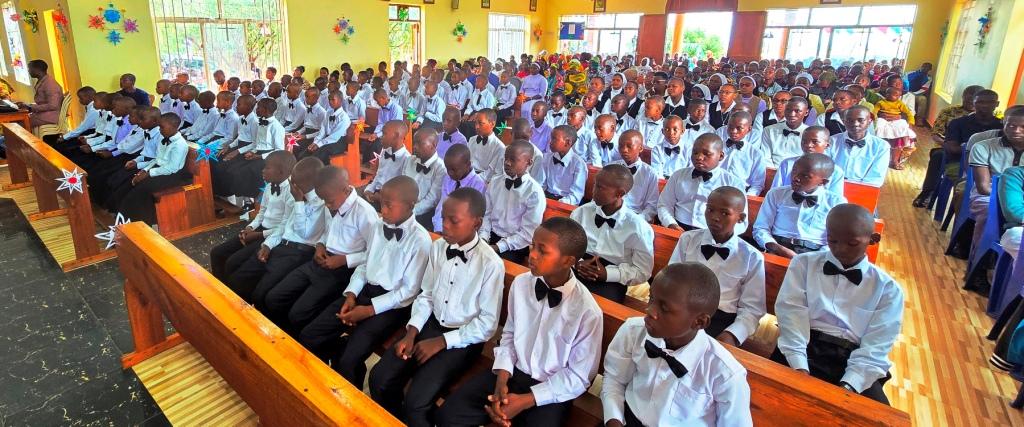
Our Journey: The Growth of Kifaru Mission
From Humble Beginnings to a Thriving Community of Faith and Service

Establishment of Kifaru Parish
Kifaru Parish was officially established by a decree from the Bishop of the Diocese of Same on July 21, 2013. The parish was formed by carving out areas from Mwanga Parish and Ngulu Parish, incorporating three substations from Mwanga Parish—Kifaru, Kalimani, and Kileo—and two substations from Ngulu Parish—Kivisini and Jipe.
The foundation for this mission began earlier when, on November 14, 2012, Fr. Alwyn D’Souza and Fr. Ronald Pinto arrived to lay the groundwork. Later, on July 19, 2013, Fr. Victor Machado and Fr. Hilary Lobo joined the missionary team, further strengthening the pastoral work.
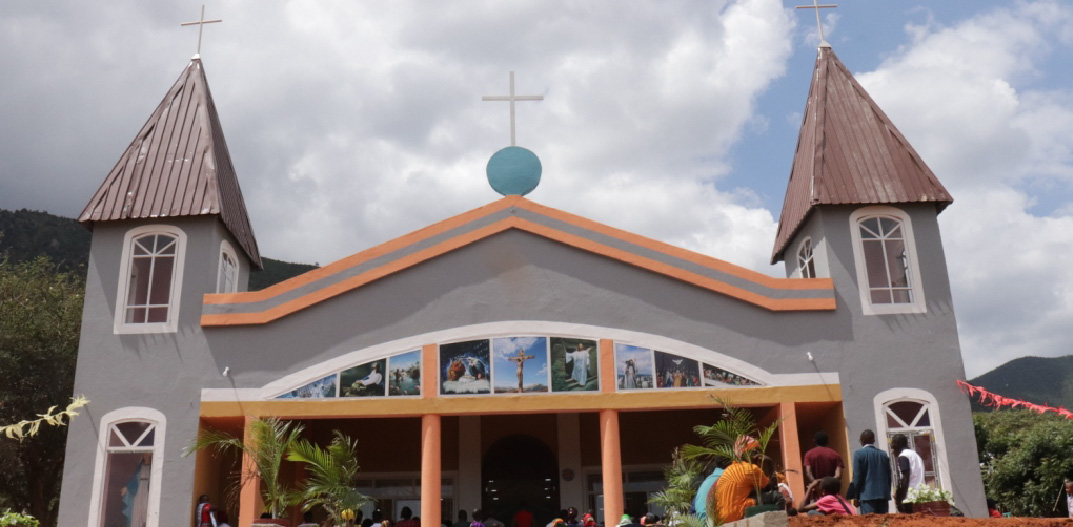
On July 21, 2013, the Kifaru Church was blessed, inaugurated, and officially declared a parish, marking a significant milestone in the spiritual journey of the community. To lead this new mission, Fr. Hilary Lobo was appointed as the first parish priest, ensuring the steady growth of faith and development in the region.

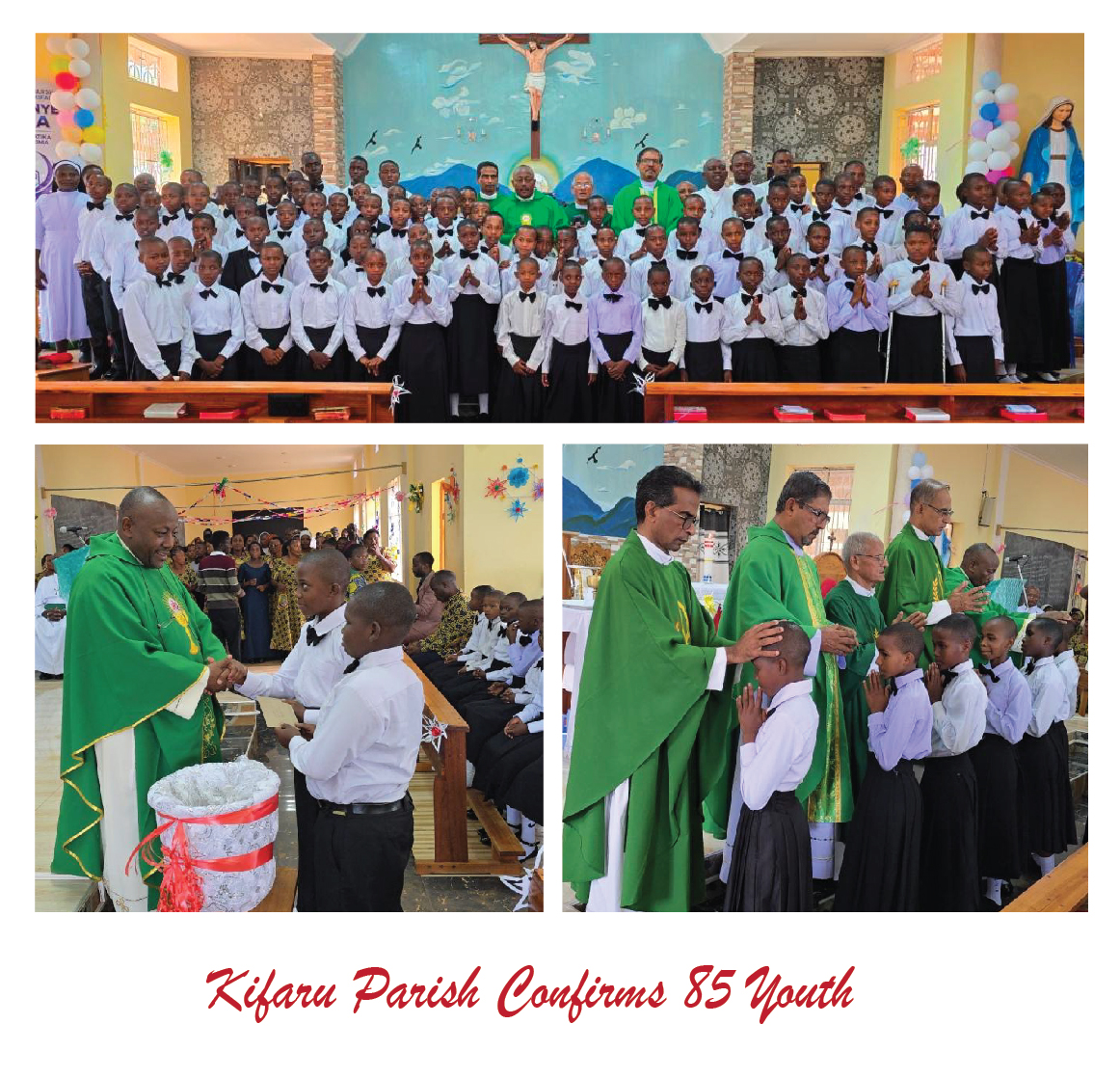
Kifaru Parish Celebrates the Sacrament of Confirmation for 85 Young People
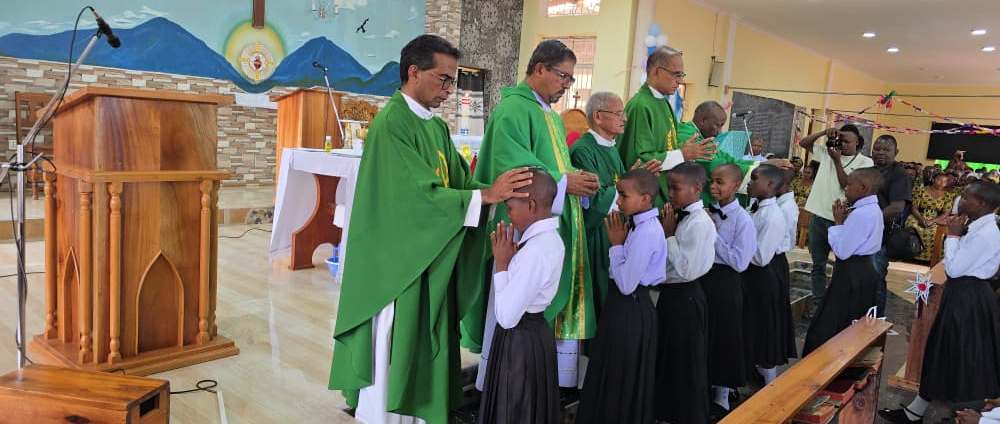
Kifaru Parish was filled with joy and thanksgiving as the community gathered to celebrate the Holy Eucharist and the Sacrament of Confirmation. A total of 85 young people received Confirmation, strengthened by the gift of the Holy Spirit to live and witness to their faith.
Among them were 71 students from Rupert Children’s Home, while the others came from various outstations and secondary schools of Kifaru Parish. The Holy Mass was celebrated by Fr. Apolinary Mshigwa, Rector of Chanjale Seminary, representing the Bishop of the Catholic Diocese of Same. He was joined by the parish priests and faithful from across the parish.
In his message, Fr. Apolinary encouraged the newly confirmed to remain faithful to their promises and allow the Holy Spirit to guide their lives. He reminded them that Confirmation is a new beginning and called them to be witnesses of Christ through their words, actions, and service to others.
The celebration was a joyful moment of prayer, thanksgiving, and renewed faith for the entire parish community.


The Origins of Kalimani and the Sisal Plantations
Many years ago, Kifaru was a dense jungle filled with thorny trees, bushes, and baobab trees. Wild animals, including buffaloes, elephants, hyenas, tigers, hippos, and crocodiles, inhabited the area. Rhinos were particularly numerous, giving the area its name, as “Kifaru” means rhinoceros in Swahili. Before the Second World War, a German named Mr. Panzia arrived and established a sisal plantation in what is now Kalimani. He built his residence on Kalimani Hill, but the British army bombed it in 1944. After the war, the British took over German-owned plantations. In 1945, Mr. Monas acquired the Kifaru plantation and expanded sisal cultivation, attracting workers from Tanzania, Rwanda, and Burundi.
Religious Development and the Establishment of Kalimani Church
Catholic workers at the sisal estate began worshipping in a house provided by the plantation management, marking the beginning of Catholicism in Kifaru. More settlers arrived from Ugweno, Usangi, and Kilomeni, increasing the congregation to approximately 150 worshippers. During the 1950s, priests from Kilomeni and Fumbang’ombe visited periodically to celebrate Mass. In 1963, the government nationalized sisal estates, prompting many foreign workers to leave and reducing the Catholic population. Later, worshippers increased to between 50 and 90. In 1981, army officials allocated land for a church, and in 1984, Bishop Josephat Lebulu laid its foundation stone. Meanwhile, a thatched mud building served as a temporary place of worship in Kalimani.
Village Development and Growth of the Church
The decline of the sisal industry caused many workers to leave, reducing the Catholic population to approximately 70. In 1980, the military occupied the former estate, relocating remaining civilians to Kalimani. Mr. Yohana Mzigaba became Kalimani's chairman, separating it administratively from Kifaru. In 1987, the military vacated the area, and former estate buildings were converted into Kifaru Secondary School. The arrival of approximately 75 Catholic students increased worshippers to 150. Road construction later increased Kifaru's Catholic population to 40, prompting Sunday Mass celebrations in a primary school classroom. After construction ended, numbers declined, and worshippers rejoined Kalimani. In 1994, Mr. Kivara became catechist, serving Kalimani, Kifaru, Kileo, and Kyomu.